

The Art of Looking Closely
Flowers, forest leaves, and the lives between them in Sautee Nacoochee.
By Vivian · A journey through the flowering seasons
There are places the world has not finished with. Places where time still moves at the pace of moss, and memory drifts gently in the bends of water. In the Appalachian foothills, the creeks and streams do not hurry. They wander. They pause. They listen. And in their patient flow, they remind us of something we once knew.
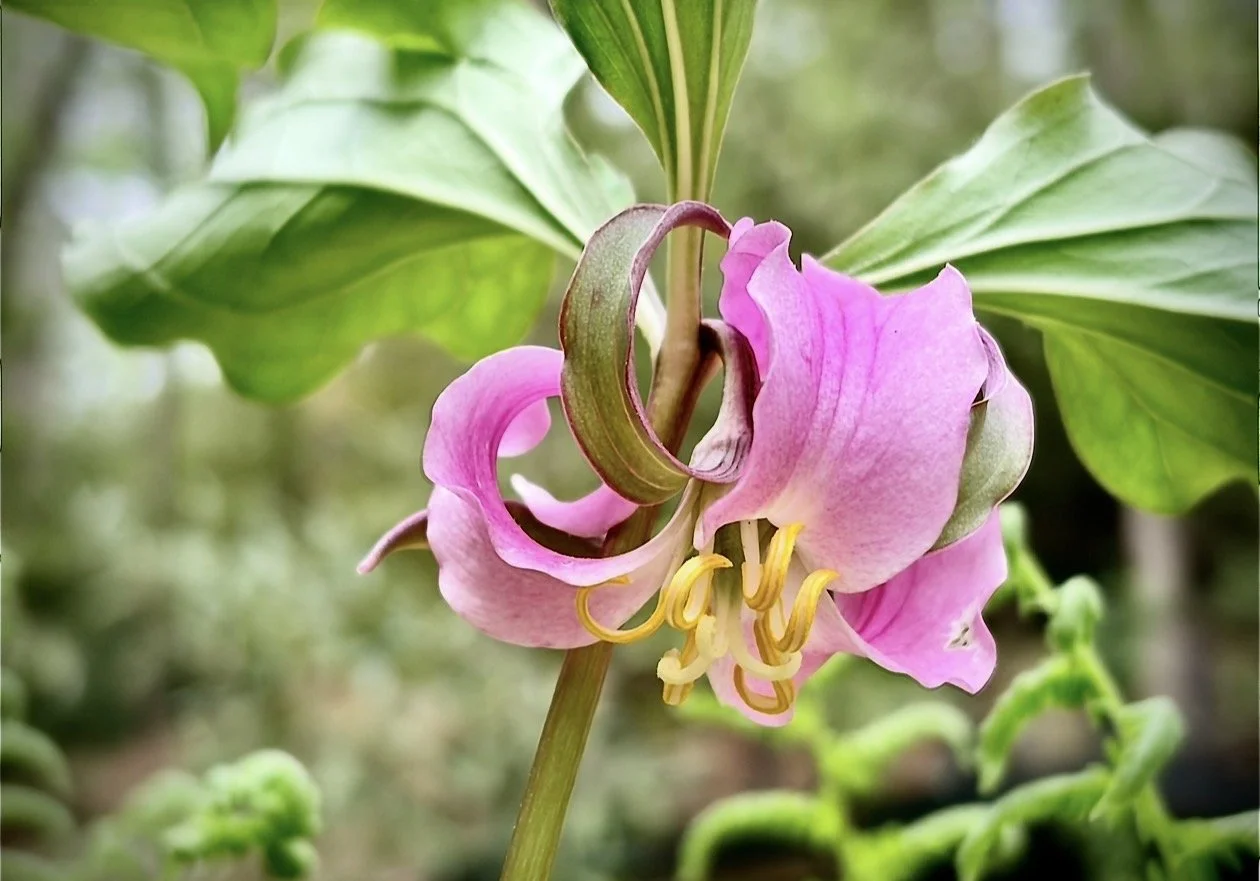
A nodding pink trillium: one of the woodland details that invites a closer look.
Some of my favorite things at Taliama ask me to bend down.
A pink flower turns its face toward the earth. A leaf carries a pale pattern as intricate as something drawn by hand. Inside a white blossom, small burgundy marks gather in a circle. The longer I look, the more the woodland seems to offer.
Here in Sautee Nacoochee, in the North Georgia mountains, these are the details I want to keep returning to: the curve of a petal, the sheen of a rain-wet leaf, the space a slender flower leaves around itself. Together, these photographs make a small journal of favorites across the flowering seasons.
They also raise a question that follows me from the garden into art: what becomes visible when we give something our full attention?
A note on sources and names: Georgia plant notes draw primarily on UGA Extension and Georgia DNR. Galax is supplemented by the Georgia Native Plant Society, a nonprofit. Separate sources remain for medicinal history, floral-trade information, and safety where the Georgia references reviewed do not establish those claims. These identifications are based on photographs. Several are tentative, as indicated below; exact species and cultivated varieties may require flowers, additional leaf details, or plant records. The photographs span plants with different bloom seasons and are not presented as a single day’s walk. Medicinal history below is included as cultural and botanical context, not treatment advice. Historical use does not prove effectiveness or safety, and tentative identifications must not be used to prepare remedies.
The flower that lowers its gaze
Trillium — likely Trillium catesbaei, Catesby’s trillium
The pink trillium in the opening photograph curls back on itself, revealing yellow anthers beneath a canopy of green. Its downward-facing flower and recurved petals suggest Catesby’s trillium, sometimes called bashful trillium.
This southeastern native flowers in spring. UGA places it in relatively dry, acidic woodland with little disturbance. Its garden value lies in that intimate scale: a flower discovered near the ground. Existing plants are best appreciated in place; this species does not transplant readily. For a new garden, seek nursery-propagated stock.
Georgia plant notes
UGA recommends Catesby’s trillium for shaded woodland gardens and perennial borders. Its species account emphasizes relatively dry, acidic woodland with little disturbance. This advice applies if the photographed identification is confirmed.
UGA Extension — Catesby’s trillium ↗
Supplementary botanical details: NC State Extension ↗
In the garden and in medicinal history
Supplementary uses, history, and safety; sources identified below.
Nursery-propagated trilliums offer spring interest beneath deciduous trees. Catesby’s trillium also serves as a host for certain moth caterpillars. Medicinal claims about other trillium species should not be transferred to this tentatively identified plant; the references reviewed do not establish a clinical benefit for Catesby’s trillium. Keep this profile focused on its woodland and wildlife value. Species reference
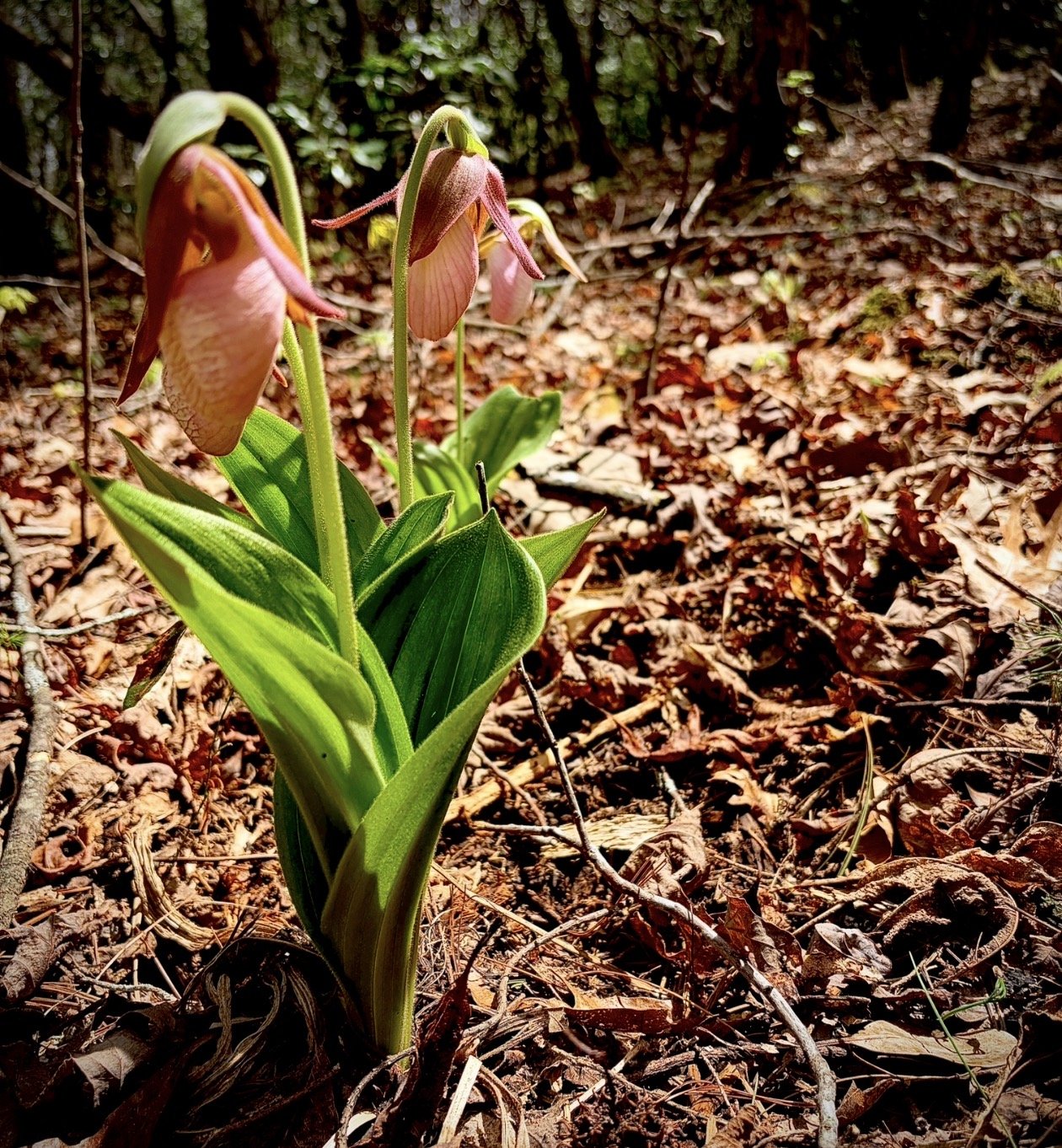
Pink lady’s slippers rise above paired, pleated leaves and a floor of fallen foliage.
These woodland orchids
hold their pink pouches above deeply veined leaves. Against the browns of the forest floor, their color feels almost luminous.
Pink lady’s slipper depends on a relationship with soil fungi, particularly when its tiny seeds germinate. It favors acidic woodland conditions and is difficult to transplant successfully. Its most meaningful place in a garden is often exactly where it already grows. Protect the surrounding ground from digging and trampling, and let the photograph be the thing carried home.
At Georgia plant notes
Georgia DNR describes this orchid in acidic pine and mixed-hardwood forests. Its seeds depend on fungi for establishment, and its flowers attract bees without providing a food reward. Protecting the existing habitat is more appropriate than collecting plants.
Georgia DNR — pink lady’s-slipper ↗
Supplementary botanical details: NC State Extension ↗
A medicinal history, with a reason to leave it growing
Supplementary uses, history, and safety; sources identified below.
NC State Extension records historical use of pink lady’s-slipper roots for nervousness, tooth pain, and muscle spasms. These are reports of past practice, not evidence that the plant is a safe or effective treatment. The plant is listed as poisonous, and harvesting roots destroys the orchid. At Taliama, its value is as a living woodland orchid and photographic subject; it should not be gathered for remedies. Historical-use and safety reference
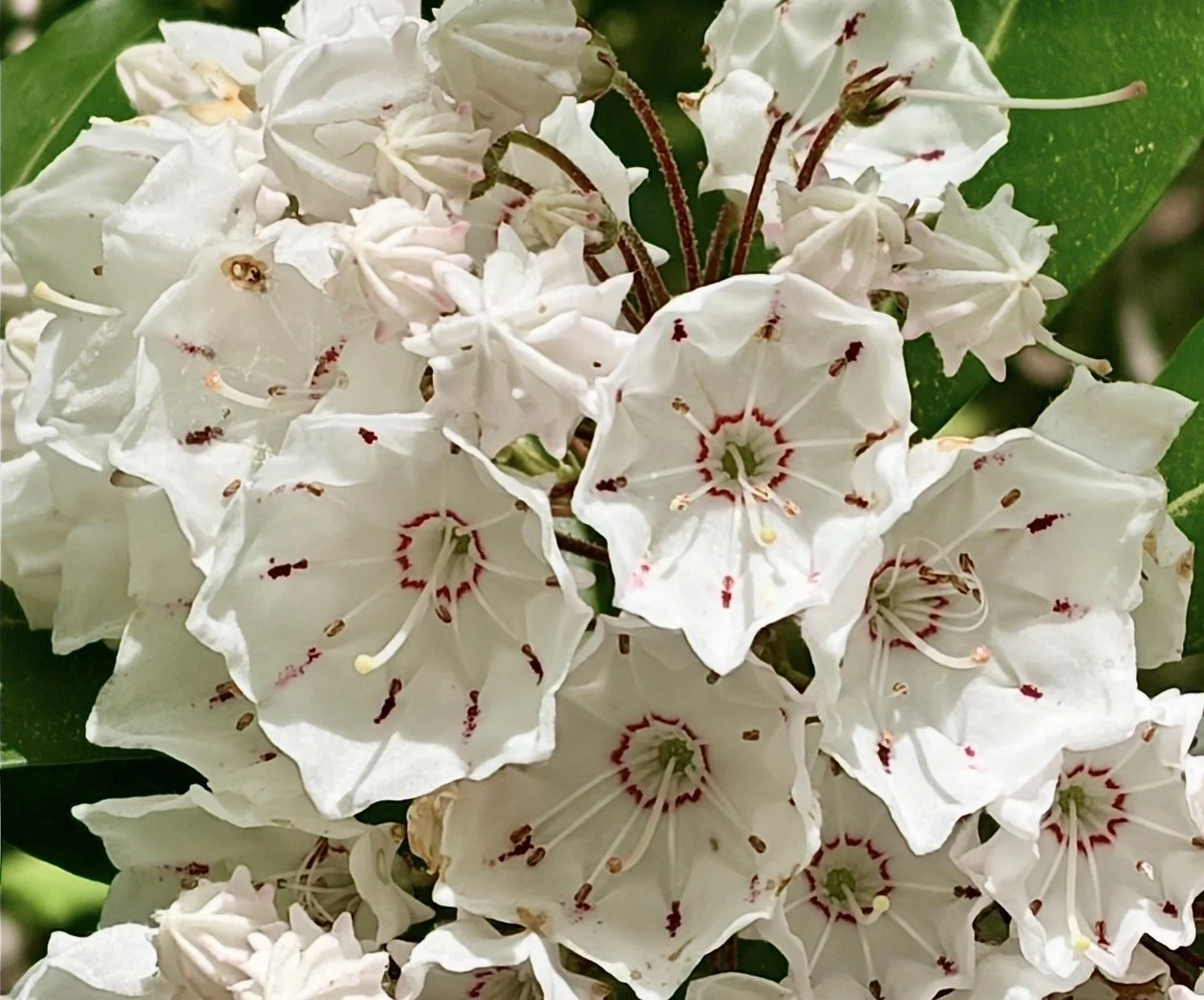
Mountain laurel’s pale cups carry a ring of delicate burgundy markings.
Mountain laurel
has the precision of a miniature ceramic bowl: pale walls, a shaped rim, and tiny markings arranged inside. It is easy to imagine an entire piece of pottery beginning with this flower.
This native evergreen shrub brings year-round structure to a woodland garden and blooms in late spring to early summer. It prefers cool, acidic, well-drained soil and partial shade. Its flowers have a remarkable mechanism: visiting bees can trigger the stamens to spring from their pockets and release pollen. Its uses here are ornamental and ecological; mountain laurel is poisonous if eaten.
Georgia plant notes
UGA recommends mountain laurel as a specimen, border shrub, or mass planting. Morning light, afternoon shade, good drainage, and mulch help protect its roots. UGA identifies the foliage as poisonous.
UGA Extension — mountain laurel ↗
Supplementary botanical details: NC State Extension ↗
Uses and safety
Supplementary uses, history, and safety; sources identified below.
Mountain laurel provides evergreen screening, woodland structure, and flowers visited by pollinators. Its patterned cups can inspire pottery and floral composition without being gathered. This is a poisonous plant, unsuitable for homemade teas, tinctures, or skin preparations. The botanical reference does not establish a medicinal benefit that would justify home use. Plant and toxicity reference
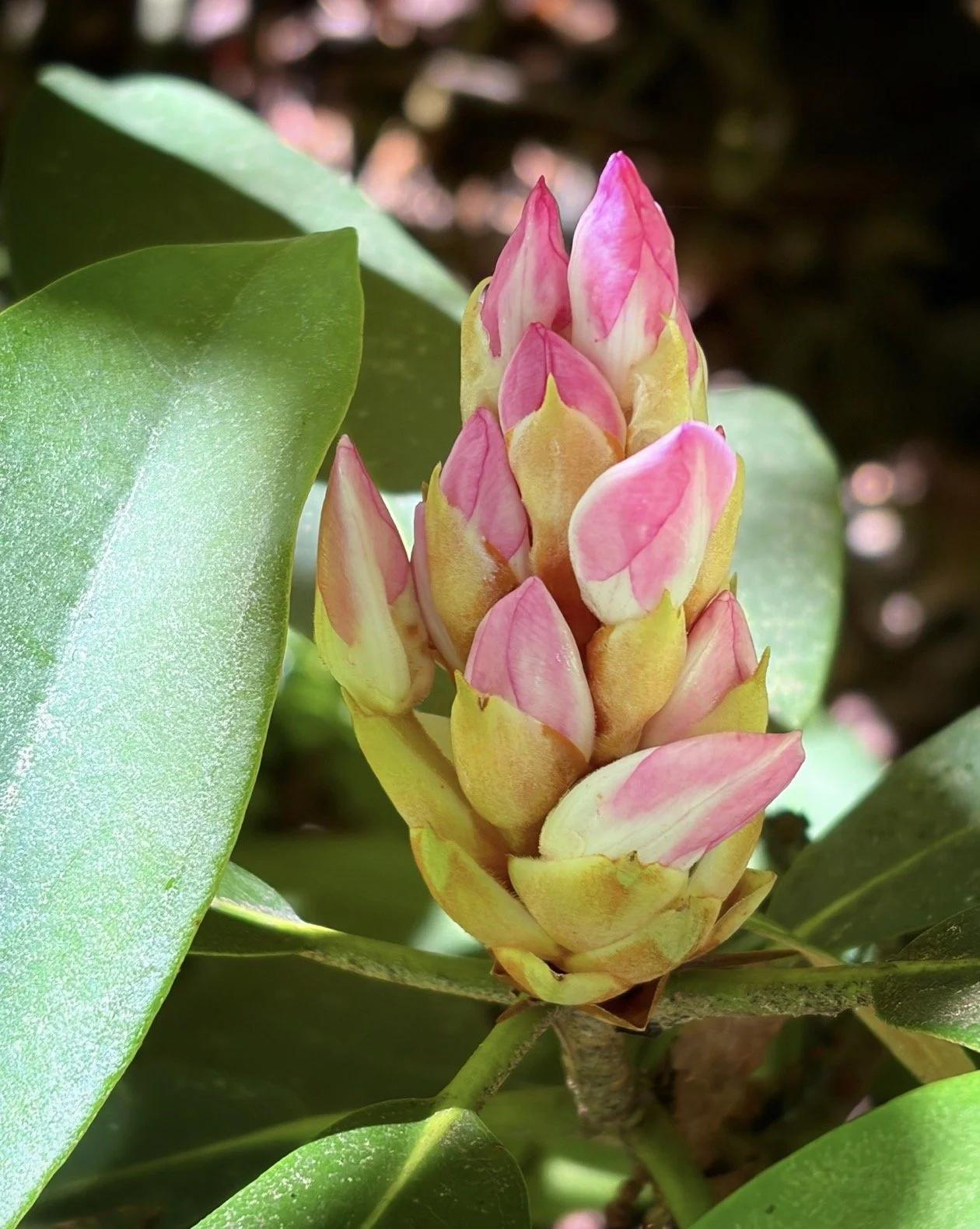
Pink-tipped rhododendron buds, still folded.
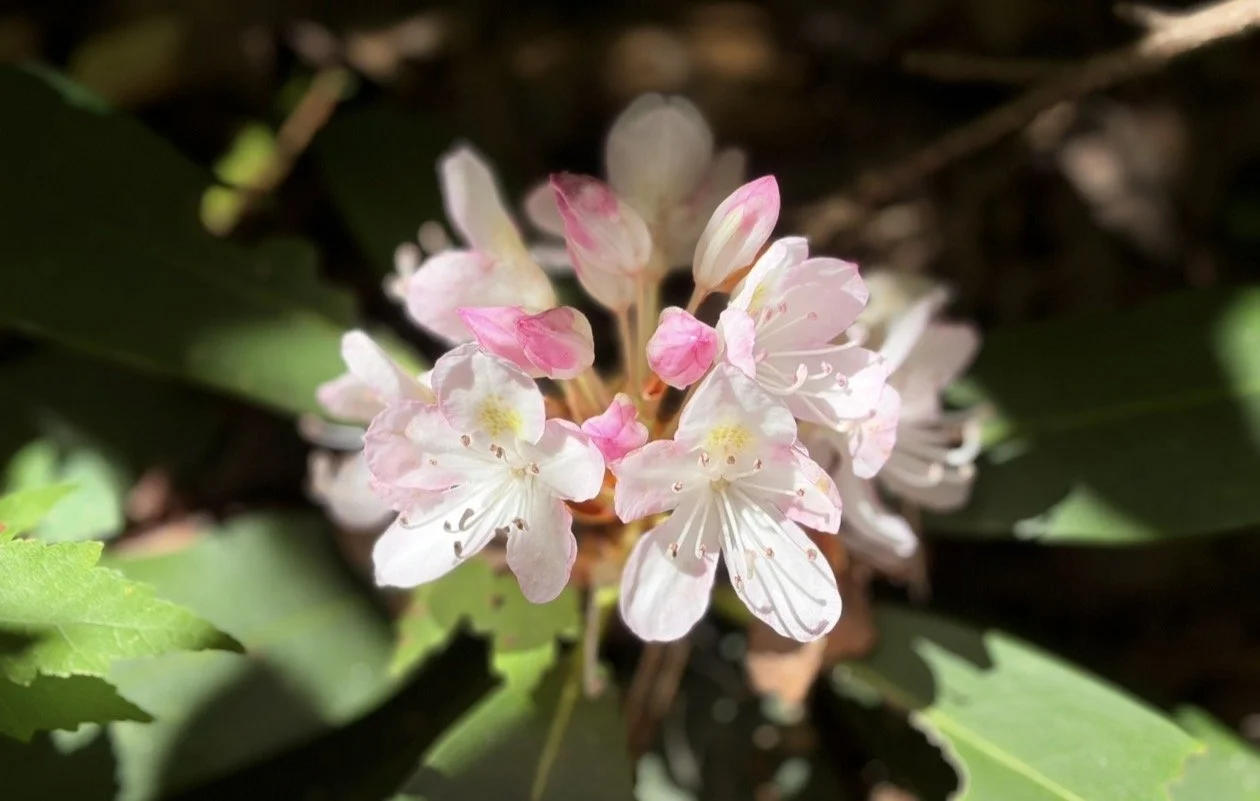
An open rhododendron cluster, pale pink and white.
One photograph holds the anticipation of opening; another reveals the delicacy of a fully open flower. Seen together, they make a study of unfolding.
The blooms and evergreen foliage suggest rosebay rhododendron, a shrub strongly associated with the southern Appalachians, although the exact identification needs confirmation. Rosebay provides substantial evergreen form in a shaded landscape. It prefers moist, acidic soil that drains freely; its shallow roots benefit from protection against disturbance. Give it room to develop its natural shape. Like mountain laurel, it belongs outside the kitchen.
Georgia plant notes
UGA recommends evergreen rhododendrons for shaded flowering borders, with acidic, organic soil that stays moist but drains well. Filtered morning sun and afternoon shade suit them; they combine well with dogwoods and deciduous azaleas.
UGA Extension — evergreen rhododendrons ↗
Supplementary botanical details: NC State Extension ↗
Uses and safety
Supplementary uses, history, and safety; sources identified below.
If confirmed as rosebay rhododendron, this shrub is useful for evergreen woodland massing and seasonal pollinator interest. Its buds and flowers offer subjects for drawing and photography. Rhododendron is poisonous if ingested; medicinal claims made for other species do not establish benefits for this plant. Do not use its leaves or flowers in home remedies. Plant and toxicity reference
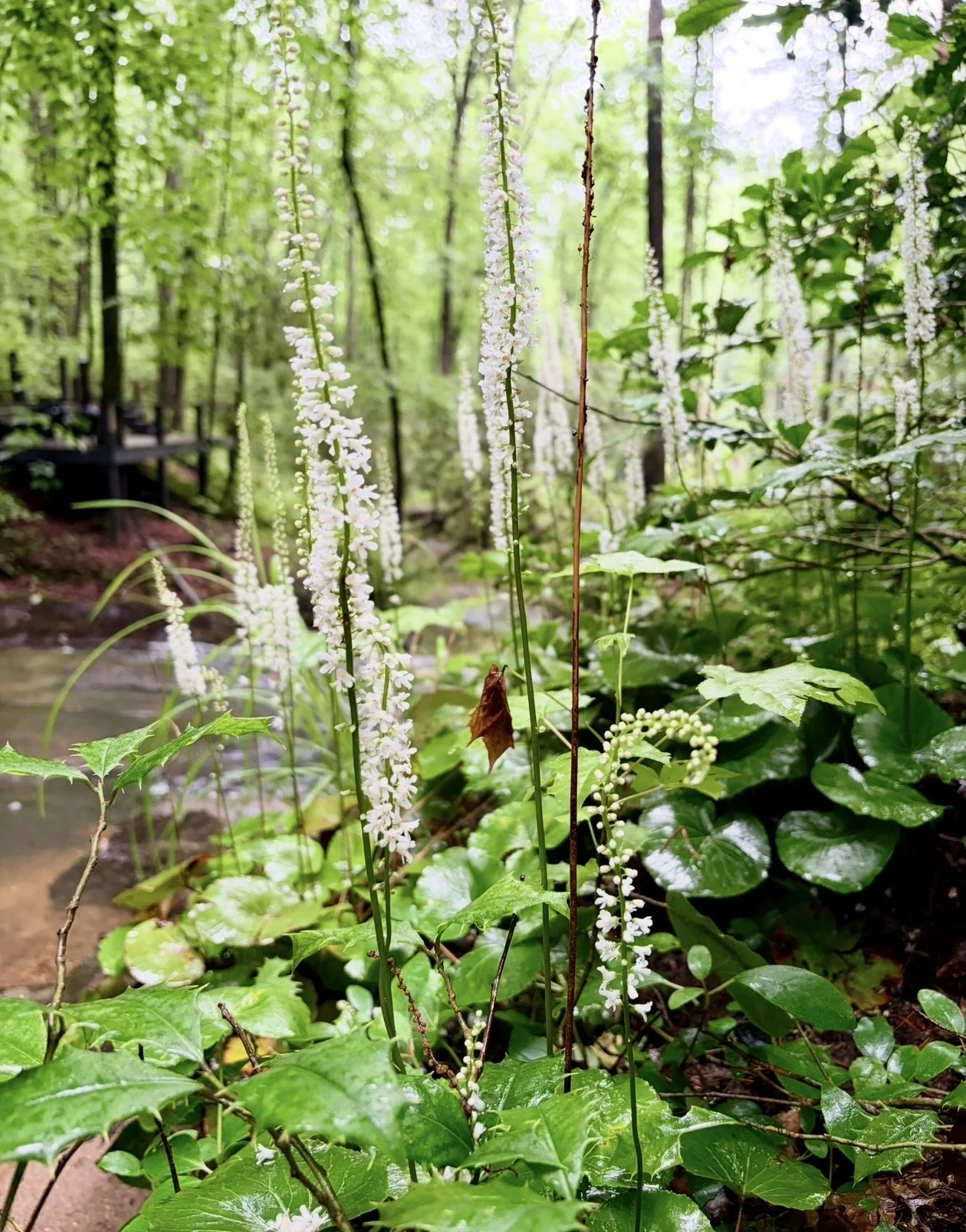
Slender white flower spikes rise above glossy galax leaves beside the water.
Galax
draws the eye upward. Rounded, polished leaves gather low to the ground while narrow spires of white flowers lift into the air.
This southeastern native offers evergreen groundcover in suitable woodland conditions. It grows slowly, favors cool, moist, acidic soil with good drainage, and flowers in late spring or early summer. Bees visit its blooms. In a shade garden, its contrast of round leaves and upright flowers is a lesson in composition all by itself.
Georgia plant notes
The Georgia Native Plant Society describes galax as an evergreen plant for shade or partial shade that gradually forms colonies through rhizomes. Its persistent foliage gives it value beyond the flowering season. This is a Georgia nonprofit reference, not a state-agency publication.
Georgia Native Plant Society — galax ↗
Supplementary botanical details: NC State Extension ↗
From woodland foliage to floral design
Supplementary uses, history, and safety; sources identified below.
Galax has a documented place in the floral trade: its durable, rounded leaves are used as decorative greenery. For arrangements, seek responsibly sourced foliage rather than stripping established woodland patches. NC State research has addressed the pressure of commercial collection and the potential for cultivation. The sources reviewed describe ornamental and commercial uses, not an established medicinal benefit. NC State: cultivating galax
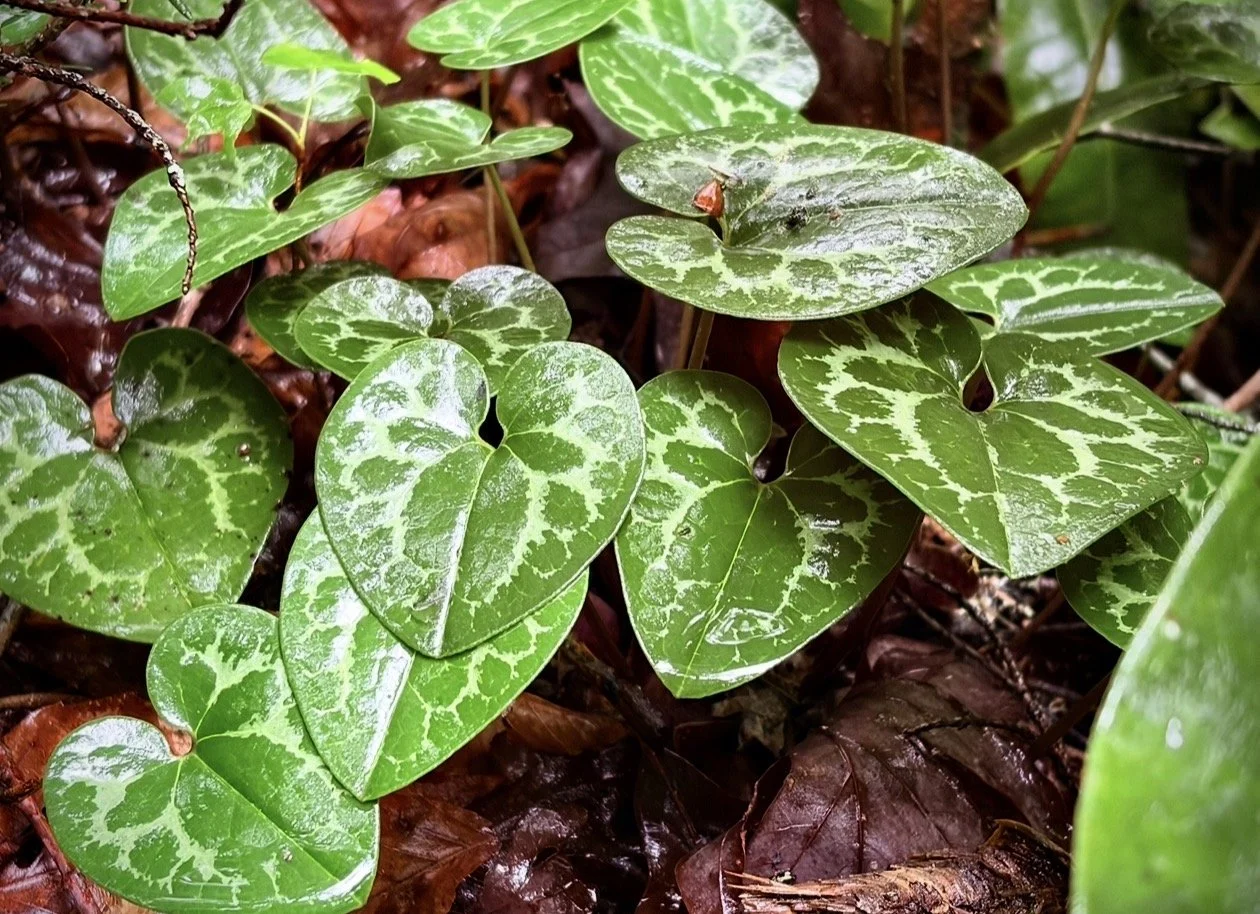
Silver-green patterns trace the glossy, heart-shaped leaves.
Ginger Root
The patterned leaves appear to belong to a heartleaf, possibly largeflower heartleaf. A view of its low, often hidden flowers would help establish the species.
For now, the photograph gives us plenty: green against silver, smooth foliage against crumbling leaves, repetition with small variations. This is a plant to consider for its visual texture once its identity and growing needs are confirmed. The common name “wild ginger,” sometimes applied to heartleaf, should never be treated as permission to use it as a kitchen ingredient.
Georgia plant notes
UGA describes largeflower heartleaf as an evergreen groundcover for moist, shady woodland with well-drained soil. Its patterned foliage offers year-round interest. The pictured heartleaf still needs species confirmation, so this remains a conditional planting recommendation.
UGA Extension — largeflower heartleaf ↗
Design value and a caution about common names
Supplementary uses, history, and safety; sources identified below.
The patterned leaves offer inspiration for textile motifs, ceramics, and shade-garden combinations. Confirm the species before selecting nursery-grown plants for a particular site. Heartleaf is sometimes grouped under “wild ginger,” but it is not culinary ginger. Some plants sold under wild-ginger names contain aristolochic acids, which can cause kidney damage and cancer. That does not establish the chemistry of this photographed plant; it is a reason to avoid experimenting with an uncertain identification. UGA’s wildflower guide also records some food or traditional remedy uses within the heartleaf group. These botanical accounts are not proof of safety; they are not presented here as recommendations to ingest heartleaf. No medicinal use is recommended. National Cancer Institute: aristolochic acids
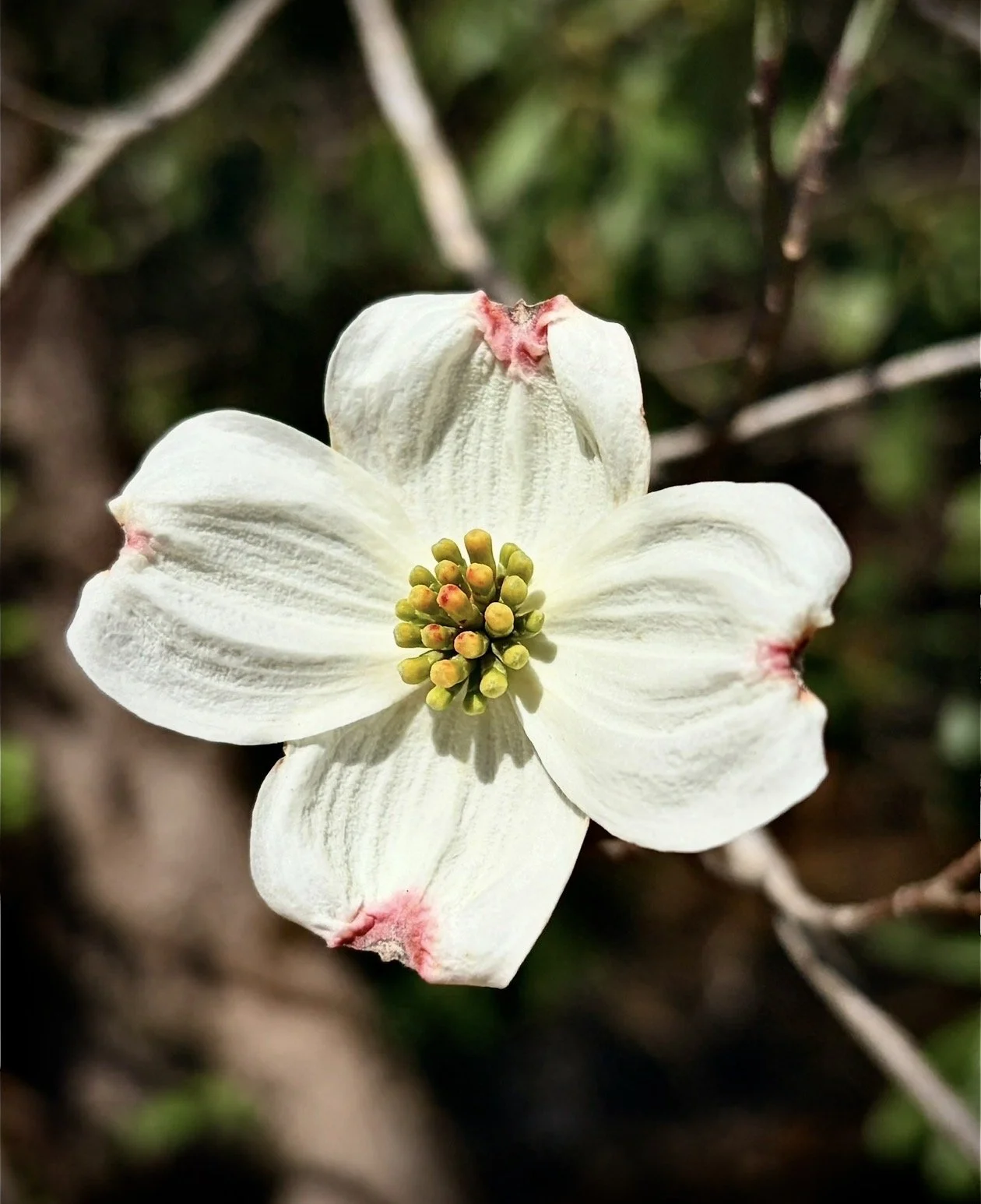
Four white bracts surround the small true flowers at the center of a flowering dogwood.
Dogwood
The white shapes we admire are bracts—modified leaves surrounding the much smaller true flowers in the center. Looking closely changes even a familiar dogwood.
This native understory tree offers spring display, autumn color, and red fruits eaten by birds and other wildlife. In a garden, it can provide a graceful transition between taller trees and lower planting. It appreciates well-drained soil rich in organic matter and protection from stressful conditions.
Georgia plant notes
UGA recommends flowering dogwood as an understory tree in light shade. Provide moisture during dry spells, avoid waterlogged sites, and mulch the root zone. Its fruits support birds and other wildlife.
UGA Extension — flowering dogwood ↗
Supplementary botanical details: NC State Extension ↗
Craft uses and recorded medicinal history
Supplementary uses, history, and safety; sources identified below.
Flowering dogwood’s hard, shock-resistant wood has historically been used for tool handles and other small, durable objects. USDA also records traditional use of its bark for fever, diarrhea, and pain. Those historical accounts do not demonstrate safety or clinical effectiveness, and stripping bark can injure a living tree. Its fruit feeds wildlife but is not a recommended human food; USDA identifies it as poisonous to people. Enjoy the tree for shade, flowers, and habitat rather than home medicine. USDA flowering dogwood guide
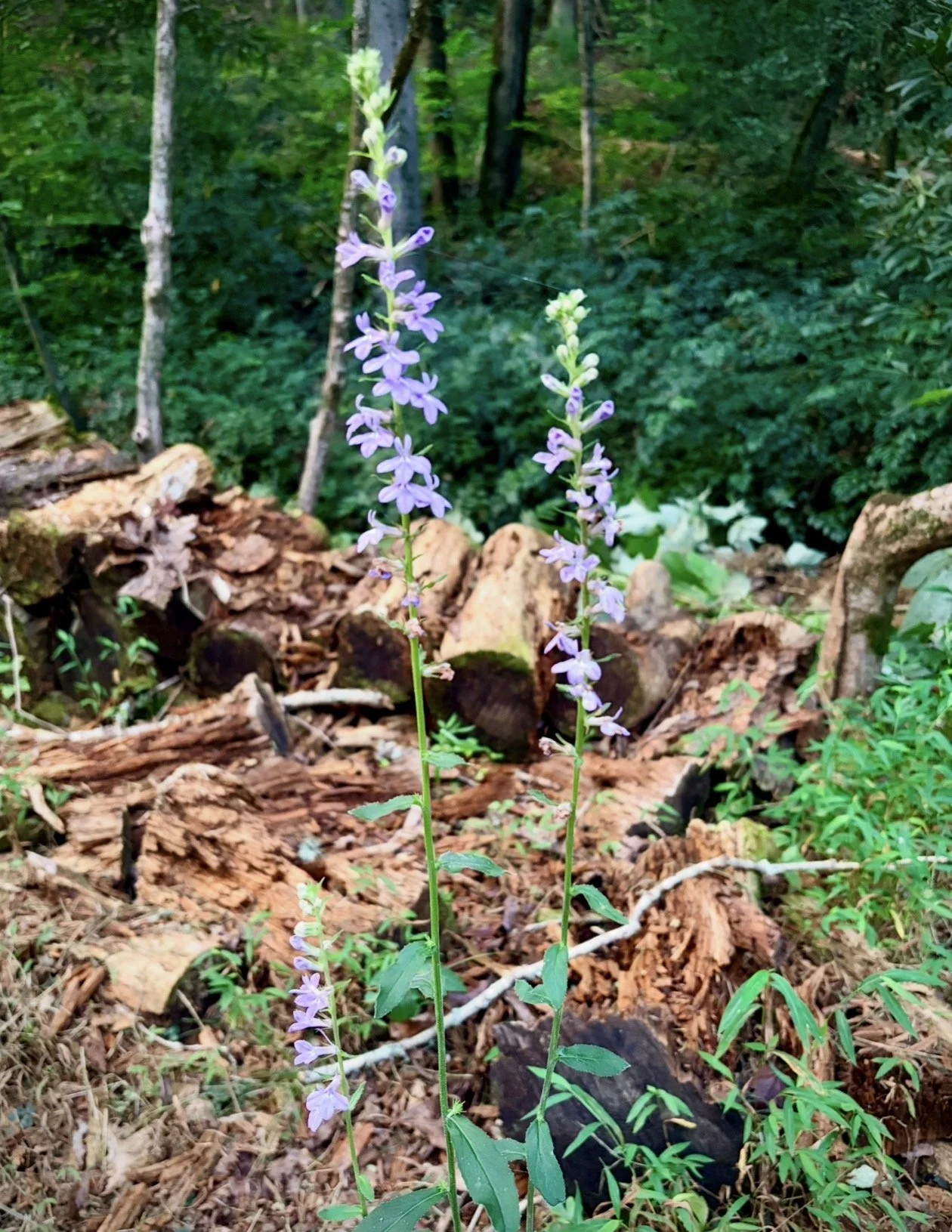
A last thread of lavender
Blue lobelia · Lobelia species; possibly Lobelia puberula
Lobelia
These lavender-blue flowers make a delicate vertical line against the roughness of fallen wood. They appear to be a blue lobelia; closer views of the flowers, stem hairs, and leaves would help confirm which one.
If this is downy lobelia, it brings late-summer-to-fall flowers to moist, sunny or partly shaded planting and attracts pollinating visitors. It could be a useful late-season accent in a suitable native garden. That planting advice remains conditional on the identification.
Georgia plant notes
UGA describes downy blue lobelia as flowering from midsummer into fall. It recommends moist, well-drained soil, morning sun, and afternoon shade, with uses in perennial borders and hummingbird or butterfly gardens. Confirm the species before applying this guidance.
UGA Extension — downy blue lobelia ↗
Supplementary botanical details: NC State Extension ↗
Garden use depends on the name
Supplementary uses, history, and safety; sources identified below.
If confirmed as downy lobelia, this plant can provide late-season color and pollinator resources in suitable moist borders or rain gardens. Herbal claims commonly associated with other lobelias, including Lobelia inflata, cannot be applied to this photograph. Downy lobelia is listed as poisonous, and the reference reviewed does not establish a medicinal benefit. It belongs in the garden rather than a homemade preparation. Species and toxicity reference
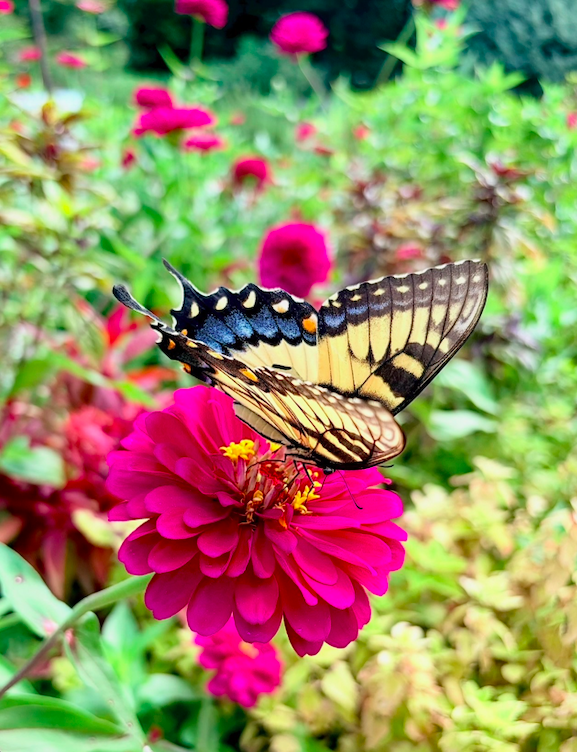
The lives between the flowers
These plants offer wildlife relationships worth watching for: bees visiting galax, pollinators working dogwood flowers, and birds feeding on dogwood fruit. Those are documented plant relationships, rather than a claim that every visitor has been observed at Taliama.
A future field note might begin with five quiet minutes beside one flowering plant: who arrives, where they land, how long they stay. A flower becomes even more interesting when we notice the lives connected to it.
From the woodland to the studio
These photographs suggest a simple arrangement: a shallow ceramic vessel, an airy line of nursery-grown flowering stems, a little pale pink, and space around each element. The heartleaf offers pattern; galax offers contrast; the trillium offers a curve.
There is no need to gather the woodland plants themselves. Their forms can guide an arrangement made with cultivated materials. The forest gives us a way of seeing that can travel with us.
Perhaps this is what I love most about Taliama: there is always something small enough to miss, and beautiful enough to return for.
What flower—or ordinary leaf—has made you stop and look more closely lately?
Photographs supplied by Vivian for Taliama. Georgia references lead each plant profile; supplementary sources are labeled separately. Georgia plant references do not establish clinical medicinal benefits for these photographed plants. Uses and medicinal-history notes reviewed September 15, 2026. This is a photographic nature journal, not a foraging or treatment guide.